Irish sea moss with herbal tea infusion
Along Ireland’s western coast, where cold Atlantic water meets the rocks, grows Chondrus crispus: carrageen moss.
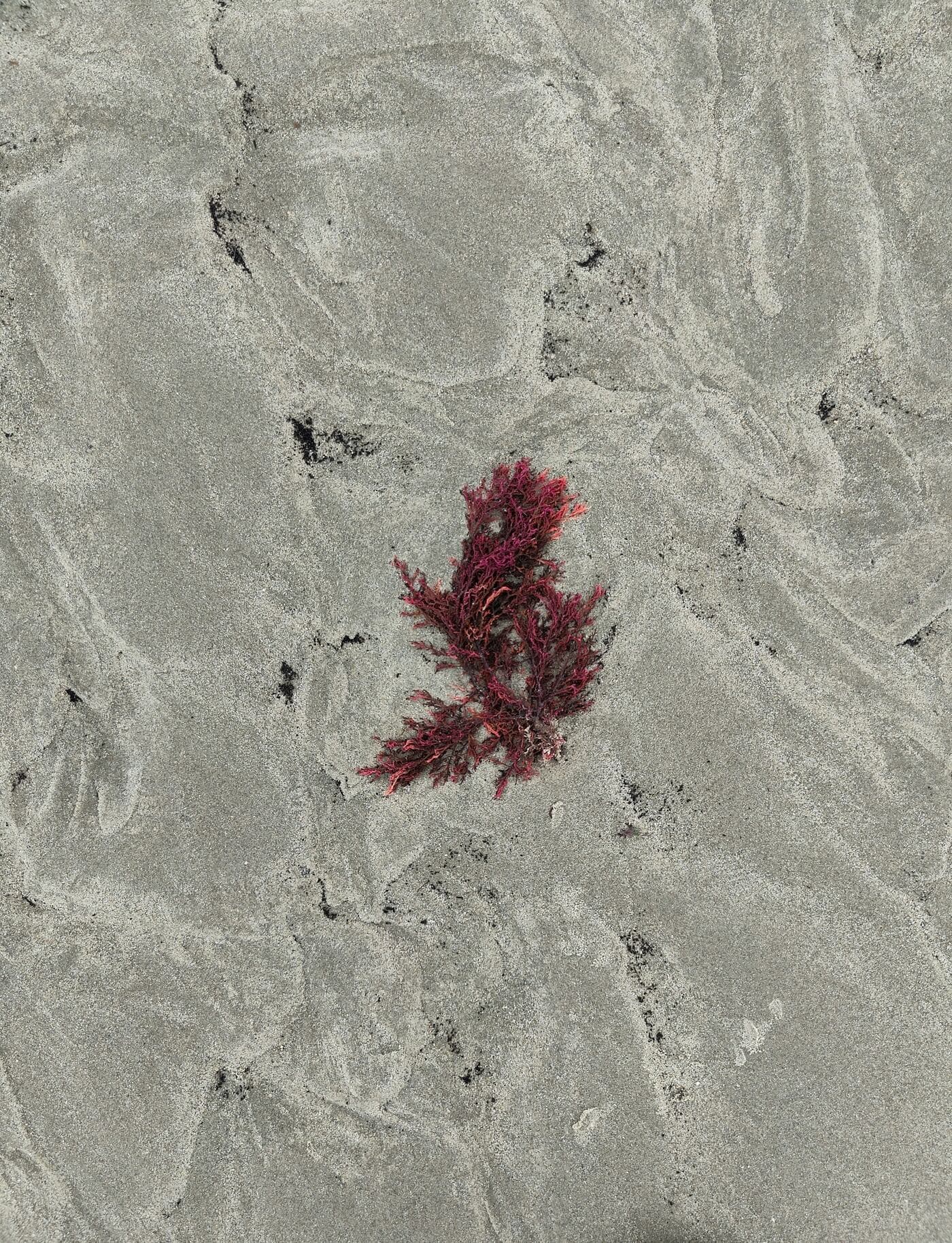
A long tradition in Irish homes
Coastal families dried carrageen in the sun and kept it in the kitchen press all year. It was simmered with milk into carrageen pudding, and brewed into warm drinks with honey and lemon when the weather turned. Its name is thought to come from Carrigeen, “little rock”.
Much of what is sold as “sea moss” is a different seaweed from warmer waters. True Irish moss grows slowly in the cold, clean North Atlantic, which gives it its character. As a seaweed it takes up minerals from the sea; the iodine and magnesium in each can are listed below.
| Mineral | Role in the body | Simple explanation | Source |
|---|---|---|---|
| Iodine | Thyroid hormones (T3, T4) | Contributes to normal thyroid function and normal cognitive function | EU health claim, Reg. 432/2012 |
| Magnesium | Enzyme helper in over 300 reactions | Contributes to normal muscle function and the reduction of tiredness and fatigue | EU health claim, Reg. 432/2012 |
| Calcium | Bones, teeth and blood clotting | Contributes to the maintenance of normal bones and teeth, and normal muscle function | EU health claim, Reg. 432/2012 |
| Iron | Haemoglobin in red blood cells | Contributes to normal oxygen transport in the body and normal formation of red blood cells | EU health claim, Reg. 432/2012 |
| Potassium | Fluid balance and nerve signals | Contributes to normal muscle function and the maintenance of normal blood pressure | EU health claim, Reg. 432/2012 |
| Manganese | Enzymes and connective tissue | Contributes to the maintenance of normal bones and normal energy-yielding metabolism | EU health claim, Reg. 432/2012 |
| Zinc | Immune cells and skin repair | Contributes to the normal function of the immune system and the maintenance of normal skin | EU health claim, Reg. 432/2012 |
| Copper | Iron transport and connective tissue | Contributes to normal iron transport in the body and normal function of the immune system | EU health claim, Reg. 432/2012 |
The potential in Mara and what we’re learning in the lab
We don’t just want Mara to taste good. We want to understand what’s in it. Working with our science partners at Teagasc, Ireland’s Agriculture and Food Development Authority, we tested both Mara blends against specific enzymes in the lab. In early lab work, Mara partly inhibited COX-1 and COX-2, two enzymes that researchers study closely.
When your body responds to injury or stress, two enzymes called COX-1 and COX-2 help produce the signals that cause swelling and soreness. They’re the same enzymes that common painkillers work on.
COX-1 and COX-2 are two versions of an enzyme called cyclooxygenase. Both do the same basic job: they turn a fat found in cell walls into hormone-like messengers called prostaglandins. Where they differ is when they work and what those messengers do.
COX-1 is the “everyday maintenance” enzyme. It’s switched on all the time in most of the body. The prostaglandins it makes protect the stomach lining, keep blood flowing to the kidneys, and help platelets clump together so blood can clot.
COX-2 is the “emergency response” enzyme. It’s usually quiet, but it ramps up quickly when tissue is injured or infected. Its prostaglandins cause the redness, swelling, pain and fever of inflammation. That response helps healing in the short term, but it causes problems when it lingers.
Why tea
Herbal teas have been enjoyed for centuries, both for their restorative qualities and as part of calming and uplifting daily rituals. Research suggests many herbal teas contain antioxidant and anti-inflammatory compounds that may help support digestive health. Each tea blend creation is meticulously crafted, not just for flavour, but for purpose. Providing extra benefit with a clean and natural taste
| Ingredient | Key compounds | Simple explanation | Source |
|---|---|---|---|
| Fennel seeds | Anethole | May help ease digestion and gut comfort | Scientific review: Fennel (2025) |
| Ginger root | Gingerols | May help support digestion and healthy circulation | Scientific review: Ginger (2020) |
| Hibiscus | Anthocyanins | May help balance inflammation and support overall wellbeing | Scientific review: Hibiscus (2022) |
| Lemon balm | Rosmarinic acid | May help calm the mind and body | Clinical study: Lemon Balm & Mood (2024) |
| Lemongrass | Citral | May help support digestion and a refreshed feeling | |
| Nettle leaf | Minerals, polyphenols | May help replenish minerals and support inflammation balance | Scientific review: Herbal Polyphenols (2019) |
| Rooibos | Aspalathin | May help support antioxidant recovery after daily strain | Scientific review: Rooibos (2023) |
Where it comes from
Our sea moss
Unbleached, wild Chondrus crispus, gathered with care in the west of Ireland.
Connemara Organic Seaweed Company (opens in a new tab)Our herbal teas
Whole organic herbs, steeped the traditional way, in custom blends made with Solaris Tea.
Solaris Tea, Co. Galway (opens in a new tab)Read more
The science and history of carrageen moss, the seaweed in every can.
Chondrus crispus on Wikipedia (opens in a new tab)
Lemongrass Citrus
Bright, green and uplifting. Zesty lemongrass and lemon verbena lead, fennel adds a gentle hint of anise, and nettle rounds it off.
Ingredients
Water, organic herbal teas (lemongrass 0.5%, lemon verbena, fennel, nettle), citric acid, salt, stevia, natural flavour, Irish sea moss (Chondrus crispus 0.6%).
Allergen: May contain traces of crustaceans and molluscs.
| Energy | 8 kJ / 2 kcal |
|---|---|
| Fat | 0 g |
| of which saturates | 0 g |
| Carbohydrates | 0 g |
| of which sugars | 0 g |
| Protein | 0 g |
| Salt | 0.075 g |
| Iodine | 24.2 µg (16.1% NRV) |
| Magnesium | 21.5 mg (5.7% NRV) |
Rooibos Berry
Warm, vibrant and a little bit spicy. Smooth rooibos, lively ginger, tart hibiscus and a fresh lemon verbena finish.
Ingredients
Water, organic herbal teas (rooibos, lemon verbena, ginger, hibiscus), citric acid, salt, stevia, natural berry flavour, Irish sea moss (Chondrus crispus).
Allergen: May contain traces of crustaceans and molluscs.
| Energy | 8 kJ / 2 kcal |
|---|---|
| Fat | 0 g |
| of which saturates | 0 g |
| Carbohydrates | 0 g |
| of which sugars | 0 g |
| Protein | 0 g |
| Salt | 0.075 g |
| Iodine | 29.6 µg (19.7% NRV) |
| Magnesium | 32.9 mg (8.8% NRV) |
NRV: nutrient reference value. 330 ml per can. Zero sugar, caffeine free, vegan.